
Japan for the first time: a 14-day route from Osaka to Tokyo
A day-by-day 14-day Japan itinerary for first-timers: Osaka, Nara, Kyoto, optional Hakone or Fuji, Tokyo and a Kawagoe day trip, plus the JR Pass maths.
- Category
- Japan
- Route
- Osaka → Tokyo KIX
- Date
- Read
- 7 min
 KIX
Most first trips to Japan follow the same shape: land in Tokyo, shuttle out to Kyoto and back, fly home from Tokyo. This route flips it. Fly into Osaka, fly out of Tokyo. You never backtrack, you change hotels three times at most, and the trip starts at Kansai's gentler pace before finishing in Tokyo.
The skeleton is the same as 14 Days Japan, the most-loved program in myRota: Osaka, Nara, Kyoto, Tokyo, with a day trip to Kawagoe. We've added an optional night in Hakone or a day at Mount Fuji. Treat the day cards below as a draft. If you download the app, you can load the program and bend it to your own pace.
Why start in Osaka and finish in Tokyo?
Search flights as a multi-city (open-jaw) ticket: into Osaka Kansai (KIX), out of Tokyo Narita (NRT) or Haneda (HND). On many routes the price is close to a plain return, and it saves you half a day of travelling back across the country just to catch your flight.
| City | Nights | Why |
|---|---|---|
| Osaka | 3 | Easiest base for Nara, and the best city for eating out |
| Kyoto | 4 | Temples are best early, so give yourself mornings to spare |
| Hakone (optional) | 1 | Onsen, a ryokan dinner, a shot at Fuji views |
| Tokyo | 5 | Also your base for Kawagoe and Fuji day trips |
Osaka and Nara: days 1 to 3
From Kansai Airport, Nankai's Rapi:t train gets you to Namba in roughly 35 to 40 minutes. Book a hotel around Namba or Shinsaibashi and your first evening in Dotonbori is a short walk away. Our Osaka and Nara guide goes deeper on both cities.
Arrival and Dotonbori
- Nankai Rapi:t from KIX to Namba, check in.
- Sort out your IC card at the airport: an ICOCA card, or Suica on your phone.
- Evening in Dotonbori: the Glico sign, takoyaki, okonomiyaki.
- Early night. Don't let jet lag eat day two.
Osaka Castle, Kuromon, Shinsekai
- Morning at Osaka Castle Park. The keep is a modern museum inside; we think the walls and moats are the better part.
- Lunch grazing at Kuromon Market.
- Afternoon in Shinsekai under Tsutenkaku tower. Kushikatsu rule: dip in the shared sauce once, never twice.
Nara day trip
- Kintetsu from Osaka-Namba to Kintetsu-Nara, about 35 to 40 minutes.
- Deer in Nara Park: buy crackers from the vendors only, feed them nothing else.
- Todai-ji and the Great Buddha Hall. Admission is cash only, so carry yen.
- The lantern-lined path to Kasuga Taisha, then the old streets of Naramachi.
- Back to Osaka for dinner.
Kyoto: days 4 to 7
Osaka to Kyoto is about half an hour on a JR Special Rapid; no bullet train needed. Two rules make Kyoto work: get to the big temples early, and don't rely on the buses. City buses are packed in peak season, and the Keihan line, JR and the subway are usually faster. Our two days in Kyoto piece covers the crowd strategy in detail.
Into Kyoto, Nishiki and Gion
- Morning train to Kyoto, drop your bags.
- Snack your way through Nishiki Market.
- Late afternoon in Gion and Hanamikoji. Stay out of the private lanes and follow the signs.
- Dinner in narrow Pontocho alley.
Fushimi Inari and Higashiyama
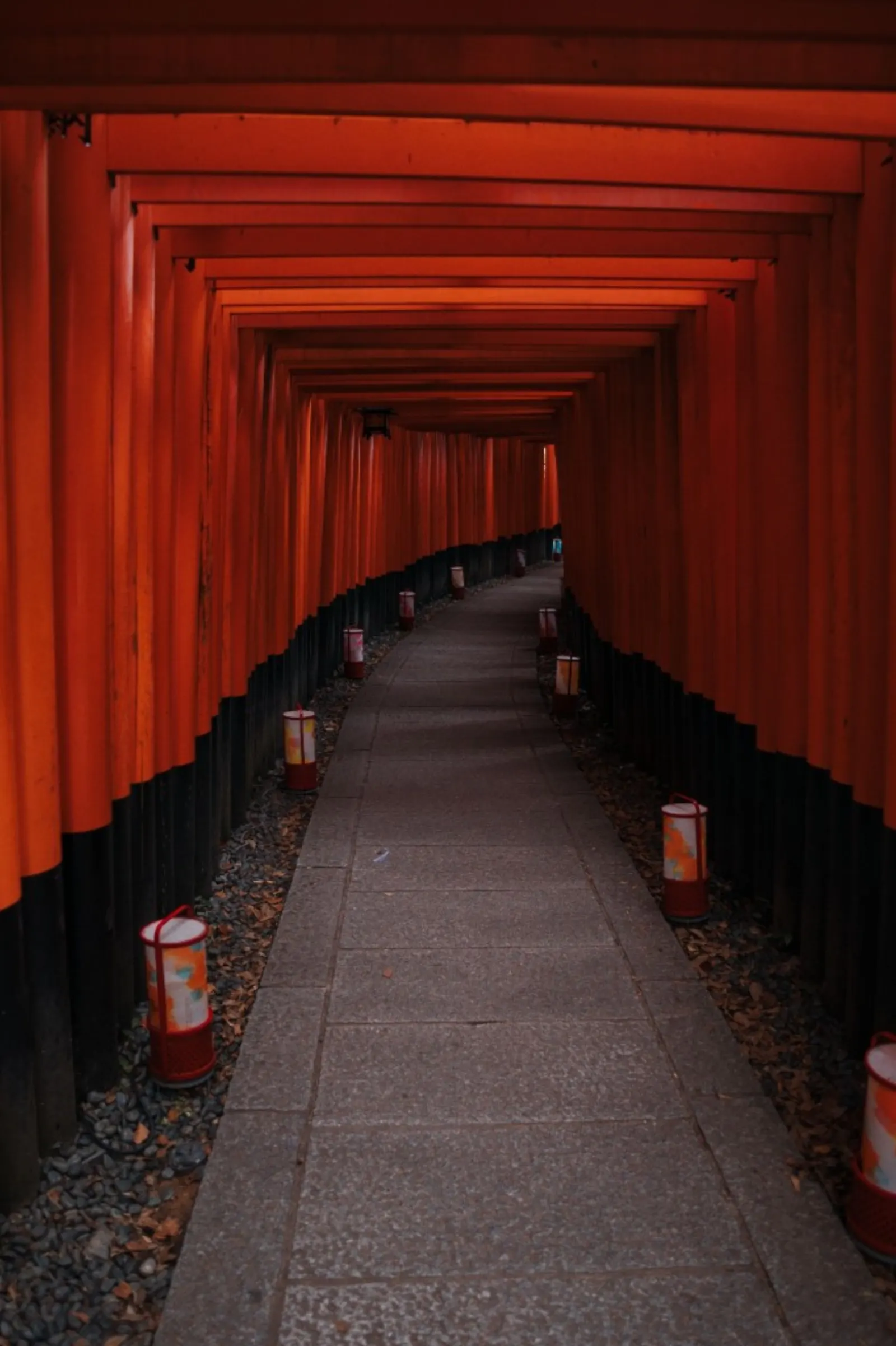
- Be at Fushimi Inari around 7 am, when the gate tunnels are close to empty.
- The full loop to the summit takes 2 to 3 hours. Turning back at the Yotsutsuji viewpoint is perfectly respectable.
- Afternoon at Kiyomizu-dera, then down the Sannenzaka and Ninenzaka slopes.
- Sunset at Yasaka Shrine and Maruyama Park.
Arashiyama and Kinkaku-ji
- JR Sagano line to Saga-Arashiyama; walk the bamboo grove before 8 am.
- Tenryu-ji's garden and Togetsukyo Bridge.
- Afternoon bus or taxi to Kinkaku-ji, the Golden Pavilion.
A slower Kyoto day
- Start at Ginkaku-ji and walk the Philosopher's Path down to Nanzen-ji.
- Or swap it for matcha and Byodo-in in Uji, or Nijo Castle.
- Pack in the evening; tomorrow is a travel day.
Hakone or Fuji: the optional stop (days 8 and 9)
This is the most flexible part of the fortnight. For Hakone, take the shinkansen from Kyoto to Odawara and head up into the hills; next morning, Odakyu's Romancecar drops you straight into Shinjuku. A night in a ryokan, with an onsen soak and a long multi-course dinner, shows you a side of Japan that cities don't.
One night in Hakone
- Shinkansen from Kyoto to Odawara, local train to Hakone-Yumoto.
- Hakone Tozan railway, the ropeway over the sulphur vents of Owakudani, a boat across Lake Ashi.
- Onsen and dinner at your ryokan.
- Day 9: Romancecar to Shinjuku, then Omoide Yokocho and Golden Gai after dark.
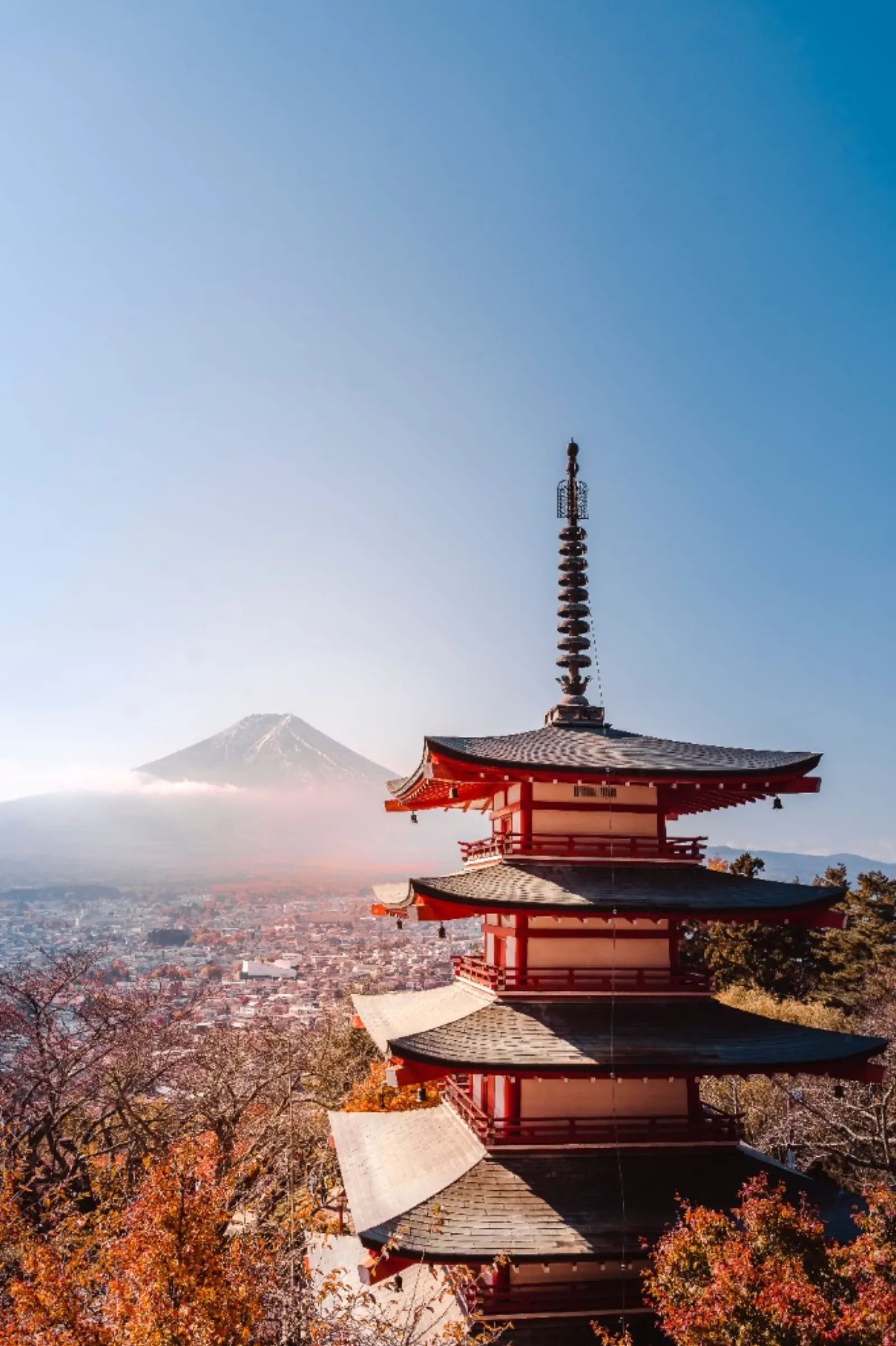
If Hakone doesn't fit the budget, go straight from Kyoto to Tokyo and see Fuji as a day trip instead. The Fuji Excursion train runs direct from Shinjuku to the Kawaguchiko area. For the Chureito Pagoda on our cover, get off around Shimoyoshida and climb a long flight of steps. Fuji disappears completely on cloudy days, so keep that day flexible and check the forecast.
Tokyo and Kawagoe: days 10 to 14
Five nights sounds generous, but Tokyo is big enough that you'll want one area per day. Shinjuku, Shibuya and the Ueno-Asakusa side are all good bases; our Tokyo neighbourhood guide compares them.
Asakusa, Ueno, Akihabara
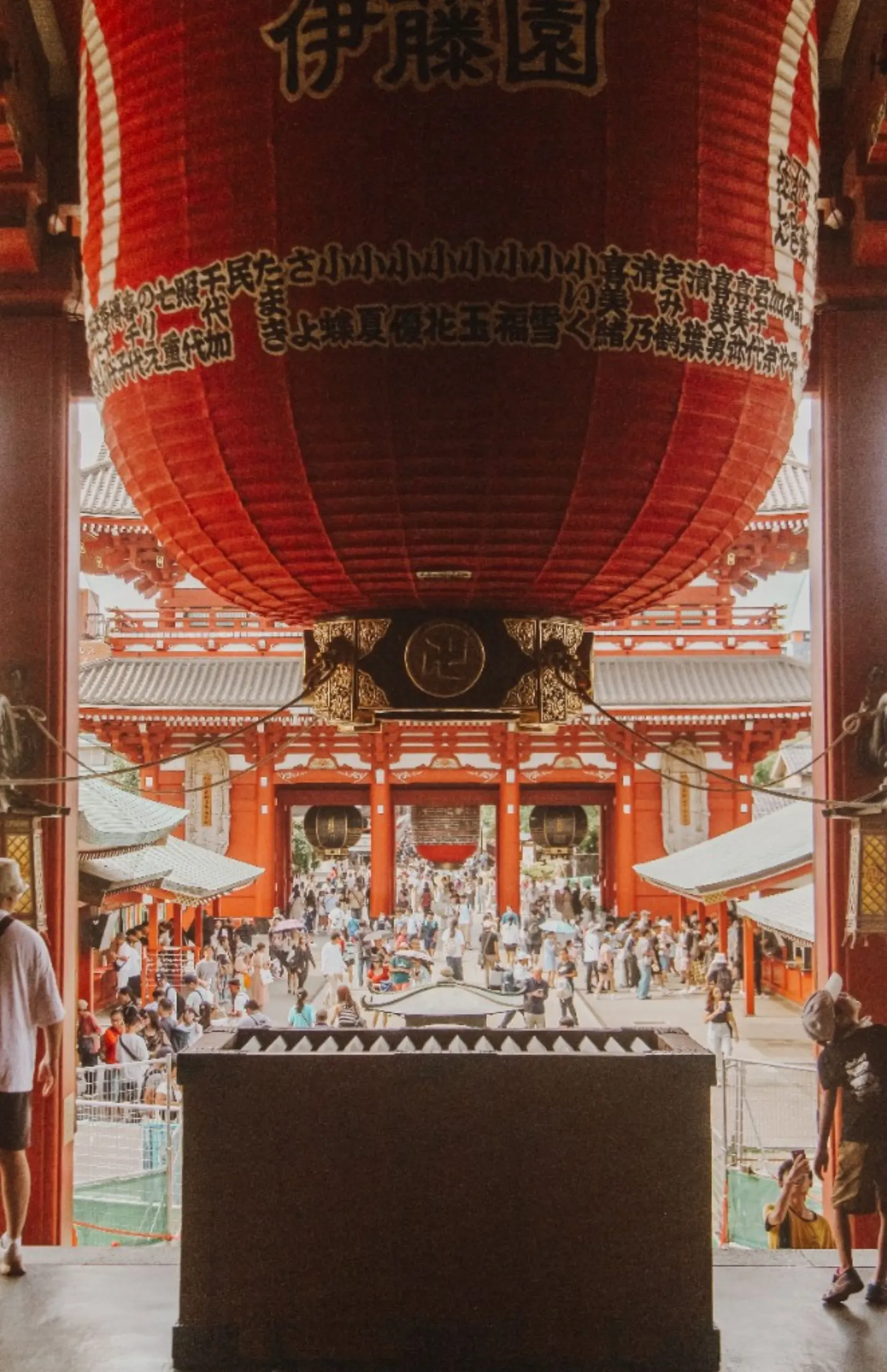
- Sensō-ji early. Kaminarimon gate is far calmer before 9 am.
- Snacks along Nakamise street, then Ueno Park and the Ameyoko market street.
- Evening in Akihabara for electronics, anime and retro games.
Meiji Jingu, Harajuku, Shibuya
- Morning walk through the forest approach to Meiji Jingu.
- Takeshita Street and Omotesando.
- Shibuya Crossing late afternoon. Book Shibuya Sky ahead if you want the view from above.
Kawagoe day trip
- Tobu Tojo line from Ikebukuro, about 30 minutes.
- The clay-walled merchant houses of Kurazukuri street and the Toki no Kane bell tower.
- Old-fashioned sweets in Kashiya Yokocho and sweet potato snacks everywhere.
- Hikawa Shrine, then back to Tokyo for dinner.
Kawagoe is nicknamed "Little Edo", and it's easy to see why it made it into the 14 Days Japan program: half an hour from Tokyo, you get a slower slice of old Japan.
Free day: Fuji or Tokyo
- Clear skies: Kawaguchiko and the Chureito Pagoda.
- Cloudy: Tokyo Tower, Ginza and the Tsukiji outer market.
- Book timed-entry places like teamLab a few days ahead.
Departure
- Get to the airport early; the tax refund check happens before you drop your bags.
- Narita Express or Keisei Skyliner for Narita; Keikyu or the monorail for Haneda.
Transport: does a JR Pass pay off on this route?
Usually not. JR Pass prices jumped in October 2023. As of November 2026 the 7-day ordinary pass is ¥50,000 on the official site and ¥53,000 through overseas agents. The only expensive JR ride on this route is the shinkansen from Kyoto to Tokyo, roughly ¥14,170 for a reserved Nozomi seat in regular season. Osaka to Kyoto and city trains are cheap, and Nara (Kintetsu) and Kawagoe (Tobu) aren't JR lines at all. You won't get near the pass price.
Use an IC card instead: Suica, PASMO, or ICOCA in Kansai. They all work in each other's regions. Anonymous Suica and PASMO cards, pulled from sale in 2023 during the chip shortage, came back in March 2025, and on an iPhone you can add one straight to Wallet. Airport transfers, shinkansen booking and the rest are in our guide to getting around Japan.
Before you go
- Entry rules: Many nationalities can visit Japan visa-free for short stays, but the list and conditions change. Check Japan's foreign ministry before booking.
- Visit Japan Web: Fill in immigration and customs details in advance and have the QR code ready on landing.
- Tax-free has changed: Since 1 November 2026 you pay tax-inclusive prices in shops and get the refund after a customs check at your departure airport. Do it before checking your bags.
- Cash: Cards work almost everywhere now, but temples, small restaurants and market stalls can still be cash only.
In myRota, Japan has a Before you go page with flights, accommodation, transport and practical info in one place, plus a currency converter. On the road you can check in at each stop and watch your progress through the program, then paint Japan on your world map when you're home. The app is on the App Store and Google Play, and we'll cover editing the program in our guide to using the 14-day Japan program.
FAQ
Is 14 days enough for a first trip to Japan?
Two weeks covers Osaka, Nara, Kyoto and Tokyo without rushing, with room for Hakone or Fuji. If you want to add Hiroshima or Hokkaido, take days from one of the big cities or extend the trip.
Should I buy a JR Pass for my first trip?
For a one-way Osaka to Tokyo route like this one, usually not; single tickets and an IC card come out cheaper. If you add far-flung stops like Hiroshima or Kanazawa, redo the maths. Check current prices on the official JR Pass site.
When is the best time to visit Japan?
Cherry blossom season (usually late March to early April) and autumn colours (often November in Kyoto) are the most popular, and prices and crowds follow. June's rainy season and the July and August heat are harder going. Winter is quieter and often gives the clearest Fuji views.
Should I start in Osaka or Tokyo?
If flight prices allow, start in Osaka. Kansai is an easier landing, and you finish near Tokyo's airports. If flights into one city are much cheaper, the route works in reverse too.
myRota team ·
Next route
 HND
What is myRota? Your itinerary, routes and travel memories in one app
A half-finished notes list, forty open tabs and a spreadsheet nobody updates. myRota was built to replace exactly that mess.
4 min readYour first solo trip: where to go, how to plan it and what to do on day one
Bag packed, ticket booked, one question on loop: what if something goes wrong? A first solo trip isn't a test of courage. It's the right city, a sane pace and a few good habits.
7 min read myRotaClass: 60 points gift
Your boarding pass is ready.
Download it, pick your first program, figure out the rest on the way.
- Passenger
- You
- From
- Here
- To
- Anywhere
- Seat
- Window
Get the app60 points gift